Battery storage can create a new source of income from underutilized commercial real estate. But before considering the financial upside, property owners have practical questions. Is it safe? Will it disrupt tenants or operations? Who's responsible if something goes wrong? And what happens to the equipment when the lease ends?
These are reasonable questions when considering new energy infrastructure on an active property. The good news is that hosting a battery doesn't necessarily mean buying, operating, or taking on all the risks of owning one.
In a developer-owned battery leasing arrangement, many of these responsibilities can be handled by the developer. Here's what property owners should know before exploring an opportunity.
How safe is a commercial battery?
Safety is often one of the first concerns about installing battery storage near buildings, employees, and tenants. And while no energy infrastructure is entirely risk-free, modern commercial battery systems are designed with multiple layers of protection.
Most commercial lithium-ion battery systems include monitoring, temperature controls, fault detection, and automated safety features that help identify problems before they escalate. Systems are typically monitored remotely, allowing operators to respond to abnormal conditions without requiring staff on site.
Battery safety has also improved as the industry has matured. According to research reported by EPRI, the failure rate of lithium-ion battery energy storage systems declined 98% between 2018 and 2025, even as global deployments expanded significantly.
Safety isn't just about the equipment itself. Before construction, battery projects must go through applicable permitting and fire safety reviews. Depending on the location, this can include requirements for setbacks from buildings and property lines, emergency access, fire detection and suppression systems, and coordination with local fire authorities.
Developers also need to account for site-specific conditions, including nearby buildings, tenant activity, and emergency response access. These considerations help determine whether a property is suitable for battery storage in the first place. Station A's platform analyzes sites to identify qualified locations, saving months and tens of thousands of dollars in pre-development assessments.
The takeaway for owners: Safety should be evaluated before a battery is installed, not after.
A qualified developer should be able to explain the system's safety features, applicable codes, and emergency response procedures.
Who owns, operates, and insures the battery?
One of the most important distinctions for property owners is the difference between hosting a battery and owning one.
In a typical developer-owned battery ground lease, the property owner leases a defined portion of the site to a developer. The developer finances, designs, installs, owns, operates, and maintains the equipment. The property owner provides the space without taking on the responsibility of running an energy storage system.
That distinction matters because batteries are often installed near existing business operations. As Husch Blackwell notes in its guide to battery storage leases, fire and environmental concerns are among the issues property owners should address when negotiating an agreement.
A well-structured lease should clearly establish who is responsible for the equipment and what happens if something goes wrong.
Typically, owners should look for several protections:
- Developer-provided insurance: Coverage for construction, equipment, and liability associated with the battery system, with appropriate additional insured protections for the property owner.
- Indemnification: Contractual provisions requiring the developer to defend and compensate the owner for specified claims arising from the developer's equipment or activities.
- Maintenance and operations: Clear responsibility for inspections, repairs, monitoring, and ongoing system performance.
- Protection against unexpected costs: Provisions addressing potential insurance premium increases, property damage, and other costs attributable to the project.
The legal framework for battery storage leases also highlights the importance of addressing environmental obligations, taxes, casualty events, and termination rights.
These protections don't eliminate every possible risk, and their effectiveness depends on the agreement and insurance coverage. But they can significantly limit an owner's exposure.
The key is to make sure responsibilities are documented before construction begins, with the owner's legal counsel and insurance broker reviewing the terms.
Will a battery disrupt my property or tenants?
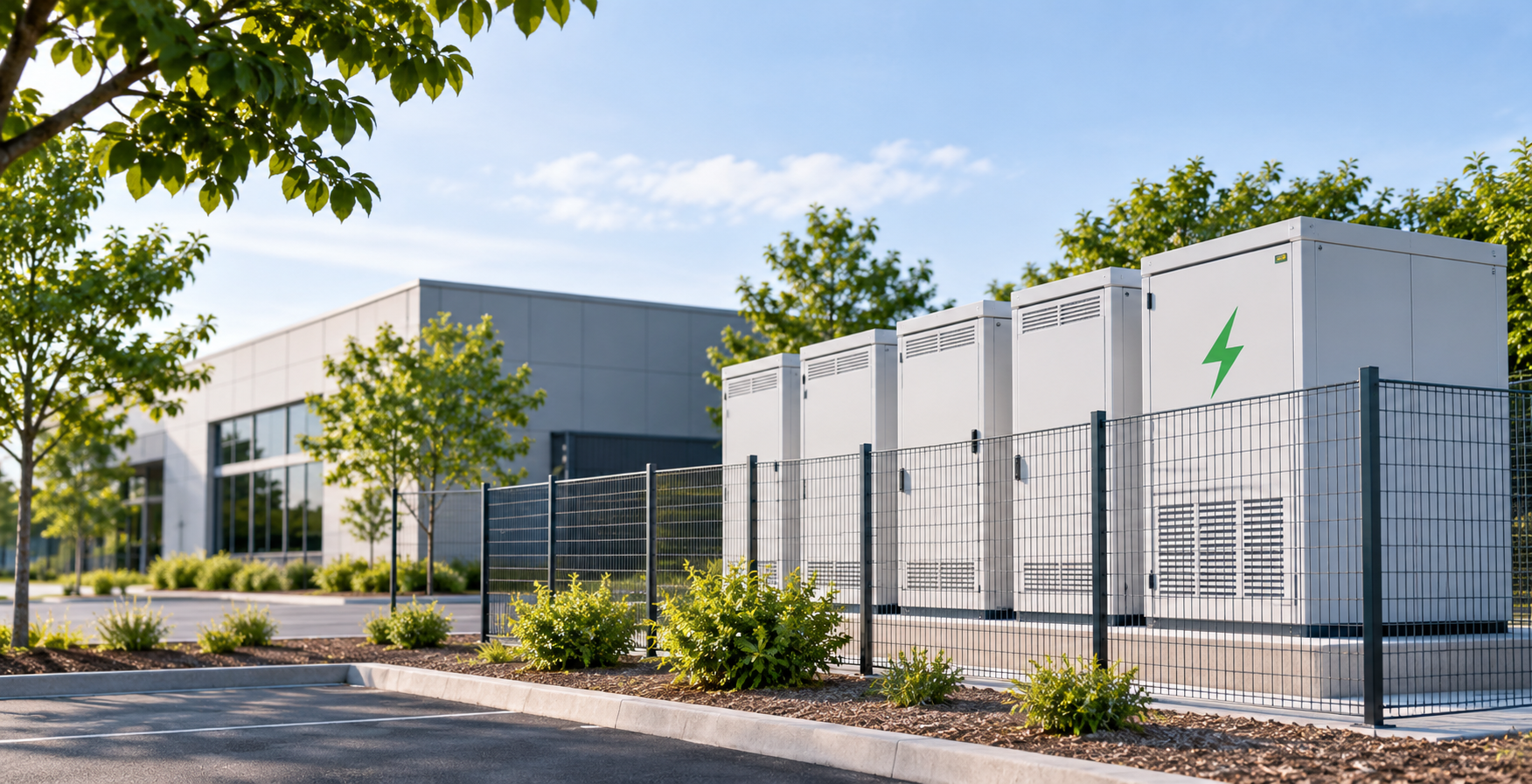
For owners of active commercial and industrial properties, another major concern is how battery storage might affect everyday operations.
Will construction interfere with deliveries? Will tenants lose parking? Will equipment create noise or require frequent maintenance?
The answers depend on the property and system design, but many potential disruptions can be addressed through careful siting and planning.
What you'll see. Commercial battery systems are commonly installed in outdoor cabinets or enclosures on a dedicated pad. Depending on the project, the area may also include fencing, transformers, and other electrical equipment. Developers typically evaluate underutilized areas of a property to minimize interference with parking, loading zones, tenant access, and future site needs.
What you'll hear. Batteries use cooling systems and power conversion equipment that generate some noise. Sound levels vary by equipment, operating conditions, and distance. Local noise ordinances and site-specific studies help determine appropriate placement and any necessary mitigation. For example, Maryland's Power Plant Research Program references a New York model law with a 60 dBA property-line noise standard, although actual requirements vary by jurisdiction.
What happens during construction. Installation can involve site preparation, electrical work, equipment deliveries, and utility coordination. Construction timelines vary, but developers should establish access routes, work schedules, and plans to minimize disruption to existing operations.
What changes once it's operating. Unlike conventional generators, batteries don't require routine fuel deliveries or on-site staffing. Systems are generally monitored remotely, with periodic visits for inspections and maintenance. Battery systems also produce no direct combustion emissions during operation.
For owners, the objective is straightforward: make productive use of available space without interfering with the property's primary purpose.
That requires more than selecting an empty corner of a parking lot. It means evaluating how the battery fits into the property's existing operations and coordinating with the people who use the site.
What happens to my electrical service and utility bills?
Because many commercial batteries are installed behind the meter, property owners may also wonder how the system will interact with their existing electrical infrastructure.
A behind-the-meter battery connects on the customer side of the utility meter, potentially allowing it to interact with the property's electrical load. Depending on the project, installation may require electrical upgrades, additional metering, control systems, or modifications to existing infrastructure.
That doesn't necessarily mean a battery will interfere with normal operations. But it does mean the developer needs to evaluate the property's electrical system and coordinate with the utility before installation.
Owners should understand whether construction will require any planned outages, how the battery will operate alongside existing building loads, and who is responsible for electrical modifications.
Utility bill impacts also depend on the system's design and operating arrangement. Some batteries can reduce demand charges by supplying energy during periods of high electricity use. Others may be primarily operated to provide capacity or services to the grid.
In those cases, the battery's financial value may come primarily from grid services rather than direct savings on the host property's electricity bill.
Hosting a battery doesn't automatically guarantee energy savings or backup power. Those benefits depend on how the system is configured, connected, and operated.
A developer should be able to explain these distinctions upfront, including any expected impacts on the property's electrical service and utility costs.
What happens when the lease ends—or the property changes hands?
Battery leases are long-term agreements, so property owners also need to consider what happens years down the road.
What if the property is sold? What if the owner wants to redevelop the site? Who removes the battery when it reaches the end of its useful life?
These are important considerations because a battery installation occupies space that may have other potential uses in the future.
A well-structured lease should address the owner's rights and obligations if the property is sold or redeveloped, including any restrictions on future construction or site access. Depending on the arrangement, buyers and lenders may also need to review or approve certain lease terms.
Equally important is what happens when the battery is no longer operating.
Decommissioning provisions should establish who is responsible for removing the equipment, disposing of or recycling components appropriately, and restoring the site. Owners should also consider financial protections, such as a bond or letter of credit, to help ensure funds are available for removal even if the developer's circumstances change.
Some states have begun establishing specific requirements for battery decommissioning. Texas, for example, adopted legislation addressing decommissioning and financial assurance for battery energy storage projects.
Regardless of local requirements, owners should understand the end-of-lease plan before signing an agreement.
The goal is to create value from underutilized space today without leaving the property owner responsible for unwanted equipment or unexpected costs tomorrow.
The right structure makes all the difference
Battery storage is becoming an increasingly attractive opportunity for commercial real estate. Rising electricity demand, growing grid capacity needs, and improving battery economics are creating new ways for property owners to generate income from space that might otherwise go unused.
But financial value is only part of the equation.
For property owners, a successful battery project also needs to protect existing operations, address safety concerns, establish clear responsibilities, and preserve long-term property value.
A developer-owned leasing model can help accomplish that by separating the benefits of hosting a battery from the responsibilities of owning and operating one.
As we've discussed in The Problem Isn't Economics. It's Bandwidth., promising energy projects can stall when owners don't have the time or resources to navigate the complexity.
The same principle applies to battery storage. Owners shouldn't have to become energy storage experts to evaluate an opportunity. They should have a clear understanding of what will be installed, how it will operate, who's responsible, and what protections are in place.
Hosting a battery should create value for your property, not a new set of problems to manage.
Interested in learning more about how batteries fit into your 2027 strategy?
Join our webinar on December 11 at 2pm ET.
